At a glance
- How do you change your eye color permanently? The main technique is keratopigmentation: an ophthalmologist places a medical pigment in the cornea, through a small tunnel made with a laser. The iris itself is not touched.
- Is laser eye color change the same thing? No. Laser depigmentation of the iris is a different procedure that destroys the brown pigment of the iris, and it raises serious concerns for the eye.
- Which colors can you get? Blue, from ice blue to ocean blue, but also honey gold, hazel, amber, emerald or olive green, and steel or ash gray. The ophthalmologist confirms which shade suits your eyes.
- How much does it cost in New York? Published prices in New York range from about $12,000 to $16,000 for both eyes. In Turkey, Aram Clinic is up to 40% cheaper, in an all-inclusive package on quote.
- How long does it take? Patients often describe about 15 minutes per eye, after a full eye examination to check that they are eligible.
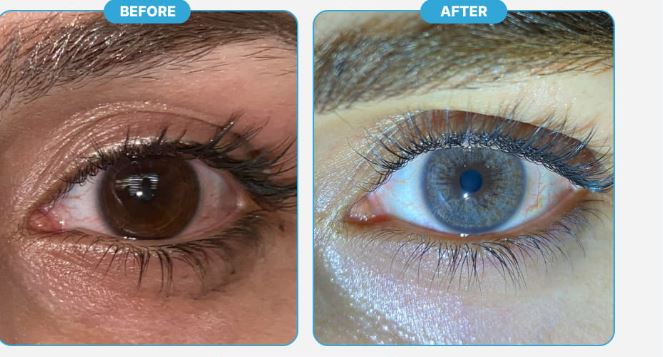
“Are those contacts?” It is the question people with a new eye color hear most. A New York patient recently shared her experience after going from dark brown to light blue: people were convinced she was wearing colored lenses, but the color was now part of her eyes. More and more Americans look into eye color change, in New York or abroad. Here is how it works, which shades are possible and how a stay in Turkey compares with a procedure in NYC.
Keratopigmentation or laser: two very different procedures
When people search for “eye color change” or “change eye color surgery”, they find two techniques that have nothing in common:
- Keratopigmentation: the ophthalmologist creates a thin circular tunnel in the cornea, usually with a femtosecond laser, then fills it with a medical pigment. The new color covers the natural iris like a filter; the iris itself is not touched. This is the technique described on our page on eye color change in Turkey.
- Laser depigmentation of the iris: a laser is applied to the iris to destroy part of its brown pigment so that the eye looks lighter. The released pigment stays inside the eye and can block its drainage, which is why ophthalmologists have raised serious concerns about it. Our page on laser eye color change explains why.
When a clinic offers a “laser eye color change”, ask whether the laser touches the iris or only prepares the cornea. The answer changes everything.
Which shade? From dark brown to ice blue, honey or emerald
Most people want to go from dark brown to a lighter color, but blue is far from the only option. These are the transformations patients ask about most:
| Color family | Popular transformations |
|---|---|
| Blue | Dark brown to ice blue, T5 brown to baby blue, black eyes to bright blue, dark eyes to ocean blue |
| Hazel and honey | Dark brown to light hazel, brown to honey gold, dark brown to amber eyes, a warm hazel transformation |
| Green | Brown to emerald green, dark brown to olive green, brown to aqua green, hazel-green eyes |
| Gray | Dark brown to steel gray, brown to ash gray, hazel to misty gray |
Clinics give their pigments names such as Riviera Blue, French Blue, Honey Gold, Hazelnut, Emerald Green, Olive Green, Steel Gray or Space Gray. Names vary from one clinic to another: what matters is to see the real pigment range during the consultation, in natural light.
What does “T5” or “grade 5 dark brown” mean?
Some clinics grade the starting eye color on a scale, where the highest grades, such as T5, describe very dark brown or almost black eyes. The darker the starting color, the more the pigment has to cover it, which influences the choice of shade: going from T5 dark brown to a very light blue is a bigger change than going from light brown to honey.
How to get a natural-looking result?
- Choose a shade that suits your face: skin tone, hair and eyebrows make some colors look natural and others look like lenses.
- Think subtle if you hesitate: a brown to honey or brown to hazel transformation changes your look while staying close to your natural tones.
- Look at results in daylight: before and after photos taken under strong light can look very different from everyday life.
What happens on the day of the procedure?
The New York patient described her day in detail, and her account matches what clinics explain:
- Eligibility tests first: vision, the cornea and other checks to confirm that the eyes are suitable for the procedure.
- A short procedure: she described about 15 to 16 minutes per eye, around 45 minutes in all.
- Sensations: she felt no pain, but the strange impression of having her eyes held open and touched, and of her vision being “played with”.
- Nerves: for her, the hardest part was anxiety, waiting for a pain that never came. Tell the team if you are very nervous.
- The weeks after: she shared updates several weeks later as her eyes settled.
After the procedure, irritation, burning or tingling may occur for a few days. You avoid heat, steam, dust, sun and wind, and attend the follow-up check-ups. Ask the ophthalmologist to explain the possible risks for your eyes in writing, and what can be done if you want to adjust the result later.
Eye color change price: NYC or Turkey?
| New York | Turkey, Aram Clinic | |
|---|---|---|
| Price (both eyes) | About $12,000 to $16,000 | Up to 40% cheaper, on quote |
| What is included | Usually the procedure and the follow-up visits | Procedure, luxury hotel, transfers, medical assistant and follow-up during the stay |
| To budget on top | Time off work | Flight to Istanbul |
New York: prices published by clinics in 2026. Turkey: Aram Clinic personalised quote after your request is reviewed. Our page on the eye color change price in Turkey compares prices with the UK, France, Canada and Australia.
From New York to Istanbul
Direct flights connect New York with Istanbul in about ten hours. On arrival, you have a full eye examination before the procedure, then a few days in Istanbul for the check-up before flying home. Our guide to preparing your medical trip to Turkey covers the practical side.
Some patients combine their eye color change with another procedure in the same trip, for example upper eyelid surgery or a nose job in Turkey, when the doctors agree on the order. Patients from other countries can read our pages on keratopigmentation in Canada and Turkey and on eye color change for Australian patients.
NYC or Turkey: how to choose
- The technique: keratopigmentation in the cornea, not a laser applied to the iris.
- The doctor: the name and experience of the ophthalmologist who will perform it.
- The eye examination: eligibility confirmed before any payment for the procedure.
- The pigments: seeing the real shades and asking which one will look natural on you.
- The follow-up: who checks your eyes once you are back in New York.
Frequently asked questions
Will people think I am wearing contacts?
Many do, at first. The difference is that there is nothing to remove: the color stays day and night.
Does keratopigmentation hurt?
The eyes are numbed with drops. Patients usually describe pressure or the feeling of their eyes being handled rather than pain, and irritation for a few days afterwards.
Can I go from pitch black eyes to emerald green?
The pigment covers the natural color, so very dark eyes can be changed. The ophthalmologist confirms which shade is possible and natural-looking for your eyes during the examination.
Can I get a quote from New York before booking?
Yes. Send a photo of your eyes in natural light and the color you would like on WhatsApp; the team replies with information and a personalised quote.